MODERN CHINA · ELECTRIC CARS
The electric car passing your window
BEV, plug-in hybrid, range extender: a plain-language guide to what is moving through the street.
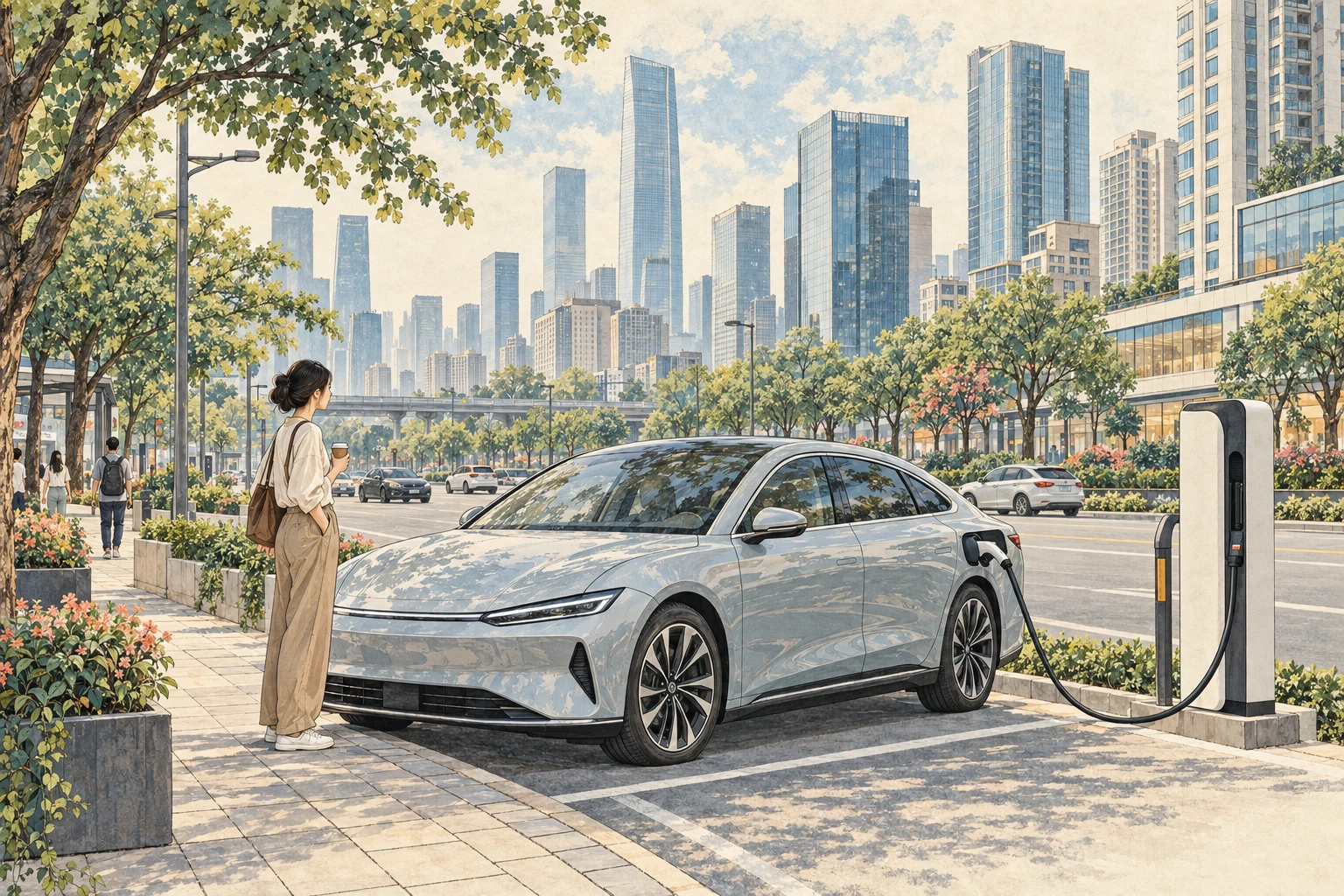
Start with the energy, not the badge
A passing car is an invitation to ask a small question: what is actually making the wheels turn? BEV means battery electric vehicle: it uses an electric motor and a battery charged from an external power source, without a combustion engine. PHEV means plug-in hybrid: it combines a rechargeable battery and electric drive with a fuel-powered engine. Both can plug in, but they are different arrangements. When you notice unfamiliar model names on a Chinese street, these categories offer a useful starting point without turning the walk into a brand quiz. Ask how the energy enters the car and how it reaches the wheels; the exterior alone may not give you the answer.
What does range-extended mean?
The phrase range-extended electric vehicle, or EREV, is commonly used for a series plug-in hybrid arrangement: an electric motor drives the wheels, while a fuel-powered engine generates electricity. It therefore still needs fuel in some situations and should not be confused with a battery-only car. Hybrid designs vary, and some systems can also use mechanical engine drive in certain conditions, so check the actual model rather than treating a label as a complete engineering diagram. For a visitor, the important distinction is simple: a car can feel electric from the passenger seat while carrying another energy source. Smooth movement does not tell you everything happening under the bodywork.
A softer slowing-down feeling is not self-driving
An electric motor can act as a generator during slowing or braking, returning some energy to the battery. That is regenerative braking. Its strength and the way it blends with the normal brakes depend on the vehicle and its settings. It does not recover all the energy used, and it is separate from the question of who is driving. A large screen, electric propulsion or a strong slowing-down sensation does not establish that a car can drive itself. Driver assistance has its own capabilities and limits. Similarly, a quiet cabin is a useful detail to notice, not proof of an empty street: electric vehicles can make low-speed warning sounds, and urban sound includes tyres, horns and people too.
The other half of the scene is the charger
Look beyond the moving car to the places where it waits. Charging is a relationship between a vehicle, a compatible connector and the equipment supplying electricity. A charger's advertised maximum is not a promise of the power a particular car will receive throughout a session; battery charge level, vehicle limits and equipment all matter. Charging stops therefore do not have one universal duration. For an ordinary city walk, notice where charging fits into the scene: a parking space, a building entrance or a rest stop. You do not need sales figures or a favourite manufacturer to understand the idea. Follow the energy from the street to the cable, and the unfamiliar vehicle becomes easier to read.